The National Archaeological Museum restores 187 Roman glass objects from the Giralt Collection with the support of Fundación Iberdrola España
- The rehabilitation project includes structural stabilization, volumetric reintegration, specialized cleaning, surface consolidation, and scientific materials analysis
- With this initiative, Fundación Iberdrola España reaffirms its commitment to the protection and dissemination of historical heritage, in line with its programme supporting the conservation of cultural assets in museums and specialized centres throughout the country
- This agreement is part of the many initiatives within Iberdrola’s 125th anniversary to bring its legacy closer to society as a whole
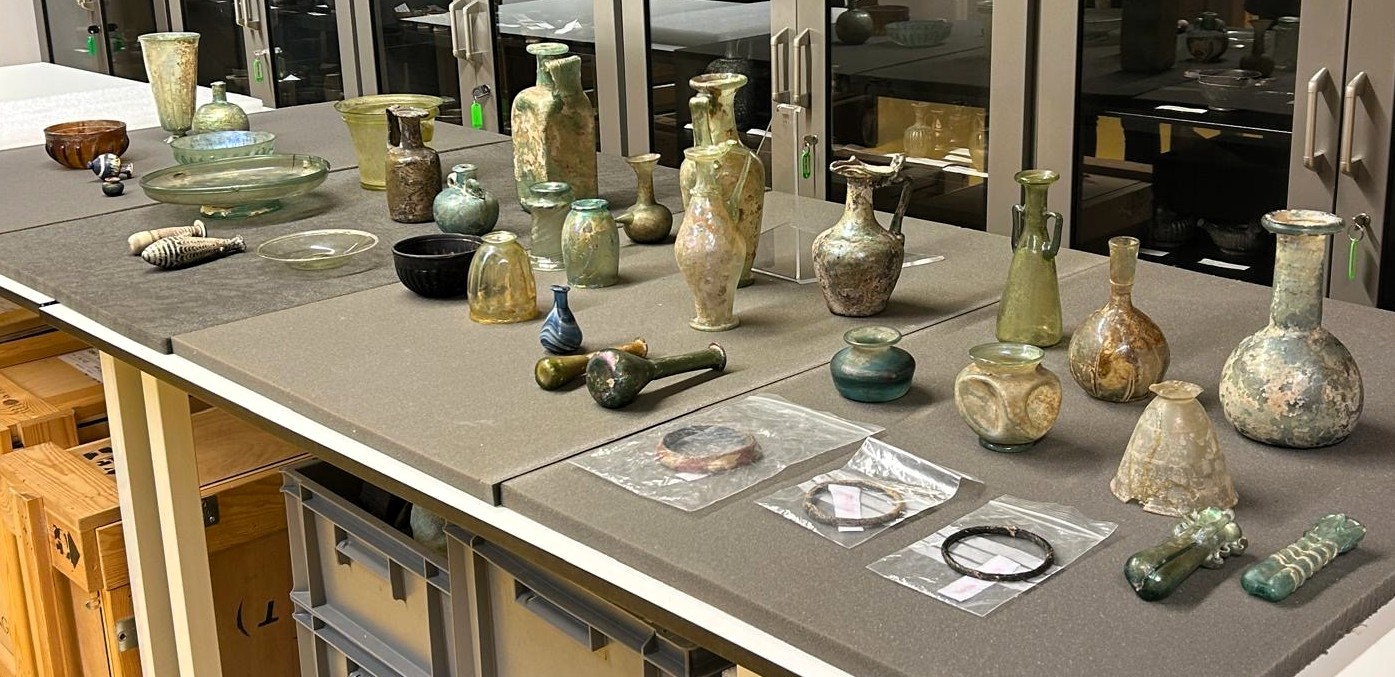
The National Archaeological Museum (MAN), a state museum under the Ministry of Culture, will carry out the restoration of 187 Roman glass pieces from the Giralt Collection thanks to funding of 60,500 euros provided through an agreement with Fundación Iberdrola España. This collection is considered one of the most important sets of Roman glass preserved in Spain.
The intervention will allow the recovery of pieces of exceptional archaeological, historical, and artistic value, many of them dated between the 1st and 4th centuries AD, notable for the variety of manufacturing techniques, typologies, and uses represented in the collection.
The restoration project includes structural stabilization, volumetric reintegration, specialized cleaning, surface consolidation, and scientific analysis of materials. The objective is to ensure the proper conservation of these fragile pieces and guarantee their future exhibition and study.
Jaime Alfonsín, President of Fundación Iberdrola España, stated: “The restoration of this collection of Roman glass will contribute not only to its preservation, but also to deepening our understanding of Roman craftsmanship techniques and their influence on the Iberian Peninsula.” Alfonsín also highlighted the years of collaboration with the MAN, noting that “this once again reaffirms the commitment of both institutions to the protection, research, and dissemination of cultural heritage. This collaboration reflects the shared vocation of both institutions to promote the conservation of historical collections and enhance the material testimonies that shape our collective memory.” He also emphasized the importance of this year, “as the 125th anniversary of Iberdrola is being celebrated with numerous activities, from art exhibitions and music festivals to technological showcases and social events for everyone.”
Isabel Izquierdo, Director of the National Archaeological Museum, added: “For the National Archaeological Museum, this is a very important conservation and restoration project involving an extraordinary collection of glass, mainly Roman, but also from the modern period. It was acquired by the State from the Giralt de Arquer family, and its heritage value is extremely high. Thanks to these restorations, we will be able to present it to the public in the Museum. A total of 187 Roman pieces from various workshops—including the Near East and North Africa—will be restored thanks to the collaboration of Fundación Iberdrola España with the Association of Friends of the National Archaeological Museum (AMAN). Most of them are blown‑glass objects dating from the 30s BC to the Late Roman period, supplemented by a small group of vitreous‑paste items dating roughly from 300–200 BC.”
The importance of Roman glass
Glass was a highly valued material in the Roman world, initially imported from Egypt and Phoenicia, both regions with longstanding artisanal traditions. From the 1st century BC onwards, Roman expansion promoted the spread of techniques and the development of a local glass industry. The introduction of glassblowing, originating in the Syro‑Palestinian area, revolutionized production by enabling the manufacture of thinner, more varied, and more transparent vessels quickly, making glass accessible to broad sectors of the population.
Glass was prized for its beauty, versatility, and hygienic properties. It was used to produce a wide range of containers for perfumes, ointments, food, and beverages. It also became one of the earliest recycled materials, as broken fragments could be melted down and reused indefinitely, fostering the rise of workshops and itinerant artisans.
By the late 1st century AD, mass production had transformed glass into a common material throughout the Empire, with major production centres in Italy, Gaul, Hispania, Egypt, and Syria. Nevertheless, certain decorated pieces or those made with complex techniques continued to be considered luxury items reserved for the elites.
The Giralt Collection: a journey through the history of glass
In 1950, the historic Catalan family of glassmakers, the Giralts—heirs to generations dedicated to glass and ceramics—embarked on a unique project: to assemble objects that would tell the story of the very material on which their craft had been built.
Their efforts eventually resulted in a collection of 255 objects, an exceptional set that spans more than two thousand years of techniques, uses, and forms. Among them, the 187 Roman pieces stand out for their rarity and beauty: small perfume bottles, delicate cups, expertly blown vessels—objects that traveled from Mediterranean workshops to reach, centuries later, the hands of a family that recognized their value.
The remaining pieces come from modern‑period artisan workshops, many of them Catalan, completing the narrative by illustrating the continuity of glassmaking traditions into recent times.
Thus, the Giralt Collection is not merely a group of objects: it is a bridge between antiquity and the present, a testament to how a family craft found, in the memory of glass, its greatest legacy.
In 2023, the family presented the collection for sale, and the State acquired it for the National Archaeological Museum for a value of 118.05 euros.
Fundación Iberdrola and culture
Fundación Iberdrola España promotes a wide range of initiatives across its different areas of activity. In the field of art and culture, it pursues a comprehensive commitment to the conservation, restoration, and enhancement of heritage assets, resulting in collaborations with major museum institutions across the country and contributing to the protection and dissemination of shared historical and artistic heritage.
125 Years of Light: A broad programme for society as a whole
This agreement is part of the extensive and varied programme created for 2026 to mark the 125th anniversary of Iberdrola’s founding, which includes art exhibitions, music festivals, technological showcases, and social events. Under the motto 125 Years of Light, the company will launch initiatives aimed at its employees, customers, shareholders, and the general public to bring its legacy closer to society and, above all, to share its vision, future outlook, and strong commitment to the communities in which it operates.