STEM Chair
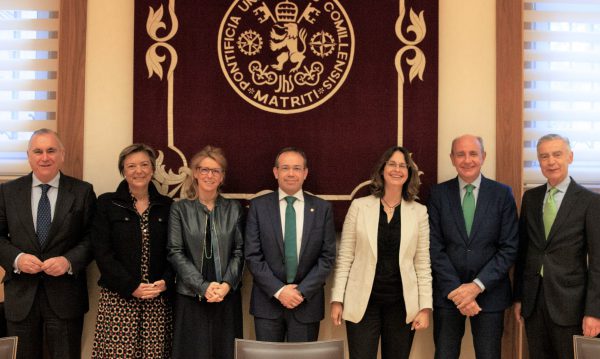
In 2020, Her Majesty the Queen received in audience the working group formed by the organizations that created the new Women in STEM Sustainability Mobility Chair. Iberdrola, through its Foundation in Spain, together with the Madrid Municipal Transport Company (EMT) and the Comillas Pontifical University, launched a Chair aimed at promoting women’s participation in STEM vocations, particularly in the field of vocational training for sustainable mobility, providing it with the necessary resources for its development.
Among the main objectives of the Women in STEM Chair are:
- Researching the causes of the low participation of women in studies related to STEM areas.
- Assessing the alignment of academic content with EMT and Iberdrola’s staffing needs.
- Promoting the cultural and social change required to encourage the inclusion of women, as well as producing an employability study focusing on quality and successful profiles in STEM degrees.
Figures show that while more than half of university students are women, fewer than 26% choose STEM-related degrees. Additionally, around 14% of young people choose to pursue Basic or Intermediate Vocational Training, of whom fewer than 33% are women, and among those, fewer than 1.4% choose STEM programs.
Over the past two years, several successful initiatives have been developed, which can be found on the Chair’s website, along with the latest reports analyzing the situation in Spain:
- STEM Studies in Spain and Women’s Participation
- STEM Studies in the European Union and Women’s Participation
OTHER ACTIVITIES CARRIED OUT DURING THE CHAIR
The Women in STEM Chair celebrates two years of activity with the goal of increasing the number of women in STEM disciplines
Noviembre 2022
Two years have passed since the creation of the Chair for the promotion of women in STEM vocations within Vocational Training for Sustainable Mobility (the Women in STEM Chair). During this time, “work has focused on increasing the number of students in general—and women in particular—who choose studies oriented toward STEM professions, both at university level and in Vocational Training,” stated Yolanda González Arechavala, Director of the Women in STEM Chair and professor at Comillas ICAI, during the renewal of the agreement between Comillas Pontifical University, EMT and the Iberdrola Foundation Spain.
González Arechavala emphasized the need to “continue fostering interest in science, mathematics, engineering and technology at all educational stages, and not only among students but also among teachers, counsellors and families,” highlighting the interdisciplinary work carried out within the Chair, which has already become a reference in the field of STEM promotion in general, and among women in particular.
For his part, Ramón Castresana, Director of the Iberdrola Foundation Spain, stressed that “Iberdrola is committed every day to innovation and to women in the sector, as well as to the importance of establishing public–private partnerships to develop this kind of initiative,” noting that 48% of the contracts formalized last year at Iberdrola were for women under 30. The company’s goal is to continue progressing in this area until it becomes an international benchmark in equality.
Alfonso Sánchez Vicente, Managing Director of EMT, highlighted “the firm commitment of the municipal company to women’s employability and the importance that female talent will have in the profound transformation currently taking place in the transport sector.” Sánchez described the Chair’s work over these two years as excellent, and assured that EMT will continue working to transform an organization capable of offering stability and career opportunities to women with STEM vocations.
The ongoing work aims to reduce the gender gap in STEM disciplines: as revealed in the recent report “STEM Studies in Spain and Women’s Participation. STEM Vocational Training: A Future Opportunity,” out of every 100 students in Initial Vocational Training (FPI), only three are girls enrolled in STEM programs. This proportion is also low—eight women for every 100 students—in university degrees linked to disciplines related to science, technology, engineering and mathematics. Furthermore, when looking exclusively at the proportion of women within the total number of FPI STEM students, the ratio stands at one woman for every nine men.
All activities carried out over these two years are compiled in the Chair’s biennial report.
Presentation of the Main Conclusions of the Women in STEM Chair
December 2021
The Delegate for the Area of Environment and Mobility, Borja Carabante; the Managing Director of the Madrid Municipal Transport Company (EMT), Alfonso Sánchez; and the President of the Iberdrola Spain Foundation, Fernando García, took part in the presentation of the main conclusions of the Women in STEM Chair, which was held at the Conecta Lab of Comillas Pontifical University.
Under the English acronym STEM (science, technology, engineering and mathematics), this public–private initiative was created due to the low presence of women in these four fields within vocational training. This Chair aims, on the one hand, to identify the causes of this situation and, on the other, to raise awareness among the educational community and the business sector about the potential of women in these professional profiles.
Some of the conclusions of the report highlight the need to attract female talent to STEM study areas in order to reduce the current gap and balance the employment rate, which is lower among women. Certain families—
STEM-related vocational training programmes are chosen by few young people in general. As a result, the labour market later struggles to find professionals to meet its needs. Another situation reflected in the report is the tendency of students to drop out after completing a mid-level vocational programme instead of continuing to study and specialise.
According to data held by Comillas Pontifical University, out of every 100 vocational training students who choose STEM studies, only three are girls. This proportion is also low—eight out of every 100—among young people who choose university degrees linked to STEM. Some of the causes given to explain this situation include lack of information within families, gender bias, the sensitivity of teachers and guidance counsellors, and stereotypes, among others.
Studies focused on the future needs of the labour market in Spain indicate that STEM professions, which are likely to offer quality employability for women, will grow by 14% in the coming years. Specifically, the mobility and sustainability sector is considered a promising pathway for women to obtain stable jobs with strong professional prospects.
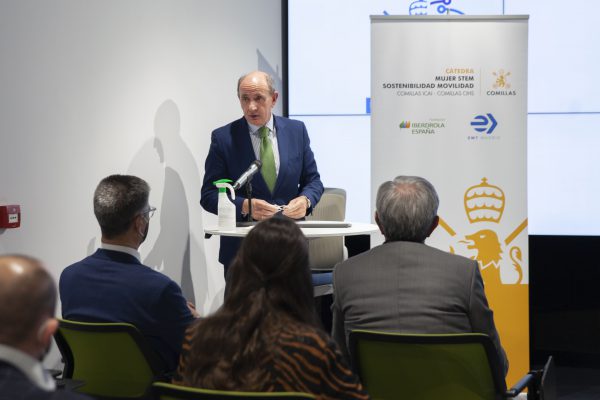
The STEM Women Chair has scheduled numerous activities and initiatives for the 2021–22 academic year aimed at students, families, and guidance counselors, such as talks, conferences, and workshops held both in person and online. Queen Letizia received representatives of the sponsoring entities in audience last year to learn more about the initiative.
This initiative, supported by EMT, the Madrid City Council, and the Iberdrola Spain Foundation, was created to highlight the importance of vocational training in boosting women’s employability in fields where their presence is still low, such as science and mathematics.
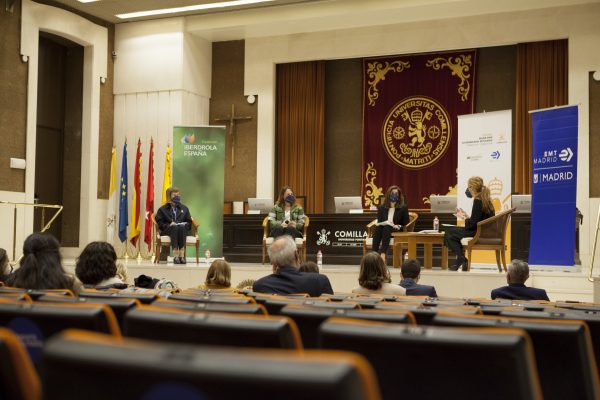
Roundtable “The Future of Women’s Employability Through STEM Training: Vocational Education, the Great Alternative”
Madrid, 13-04-2021
Studies on the future needs of professions that ensure solid career development and quality employability predict a 14% growth in STEM professions (an acronym for science, technology, engineering, and mathematics). In Spain, it is expected that 390,000 STEM positions will be created over the next two years, offering higher salaries and strong professional prospects. However, the figures show a low female presence in this field; while half of university students are women, fewer than 8% choose STEM degrees. In vocational education, the percentage of women studying a STEM-related program does not exceed 3.6%.
These are some of the figures highlighted during the roundtable “The Future of Women’s Employability Through STEM Training: Vocational Education, the Great Alternative,” organized by the STEM Women, Sustainability and Mobility Chair of the School of Engineering at Universidad Pontificia Comillas (Comillas ICAI), Fundación Iberdrola España, and EMT. The three institutions aim to draw attention to the limited current participation of women in STEM professions related to vocational education, as well as to raise awareness among the educational community and companies about the potential of women in these professional profiles. Attracting female talent to STEM vocational studies is key for companies and represents an opportunity to reduce the gender gap and achieve a more equitable society.
During the event, multiple factors in the educational, socioeconomic, family, and personal spheres behind this limited presence of women were analyzed. Yolanda González Arechavala, director of the Chair, attributes it to several causes, “ranging from a false sense of self-efficacy and the lack of female role models in media culture, to the gender bias of STEM teachers and unmotivating teaching methods, as well as a society with low scientific literacy and a poorly valued cost-benefit perception of these studies.” All these reasons contribute to the low percentages of women in STEM fields.
The roundtable is part of the agenda of the STEM Women, Sustainability and Mobility Chair, an innovative public–private initiative launched in October 2020 by Iberdrola, through its Foundation in Spain, together with the Madrid Municipal Transport Company (EMT) and Universidad Pontificia Comillas. The Chair was created to promote STEM vocations among women—particularly within vocational education for sustainable mobility. Its objectives include researching the causes of the low presence of women in these studies, analyzing how well academic content aligns with the needs of participating companies, and implementing the tactical actions necessary to foster STEM vocations among women and girls in order to reverse the current situation and attract female talent to the sustainability and mobility sector.
The event, focused on the potential of vocational education, was inaugurated by the Rector of Universidad Pontificia Comillas, Julio L. Martínez; Borja Carabante, Delegate for Environment and Mobility; and the President of Fundación Iberdrola España, Fernando García. The closing remarks were delivered by Clara Sanz, Secretary General for Vocational Education at the Ministry of Education and Vocational Training, and Rocío Albert, Deputy Minister for Education and Youth of the Community of Madrid. The session also featured Alfonso Sánchez, General Manager of EMT; Ramón Castresana, Director of Fundación Iberdrola España; and Yolanda González Arechavala, Director of the Chair and professor at the School of Engineering (Comillas ICAI).
The roundtable, moderated by Julieta de Micheo, Director of Institutional Relations and CSR at EMT, also included testimonies from women who have developed their professional careers in the sector: María de las Cruces Valencia, guidance counselor at Centro Padre Piquer; María Isabel López, assistant bodywork technician at EMT; and Tania Montes, network development manager at Iberdrola.