
Cartagena City Hall Unveils New Architectural Lighting Thanks to Fundación Iberdrola España
- The project features state-of-the-art LED luminaires, carefully installed to respect the monument, and adapted to its architectural characteristics, improving energy efficiency and reducing CO₂ emissions.
- Part of the commemorative lighting programme marking Iberdrola’s 125th anniversary, the initiative enhances the building’s architectural beauty, highlights its sculptural details in harmony with its surroundings, and reinforces its status as a landmark of Cartagena’s urban landscape.
- The inauguration ceremony was attended by Cartagena Mayor Noelia Arroyo, Regional Minister for Tourism, Culture, Youth and Sports Carmen Conesa, and Fundación Iberdrola España Chairman Jaime Alfonsín.
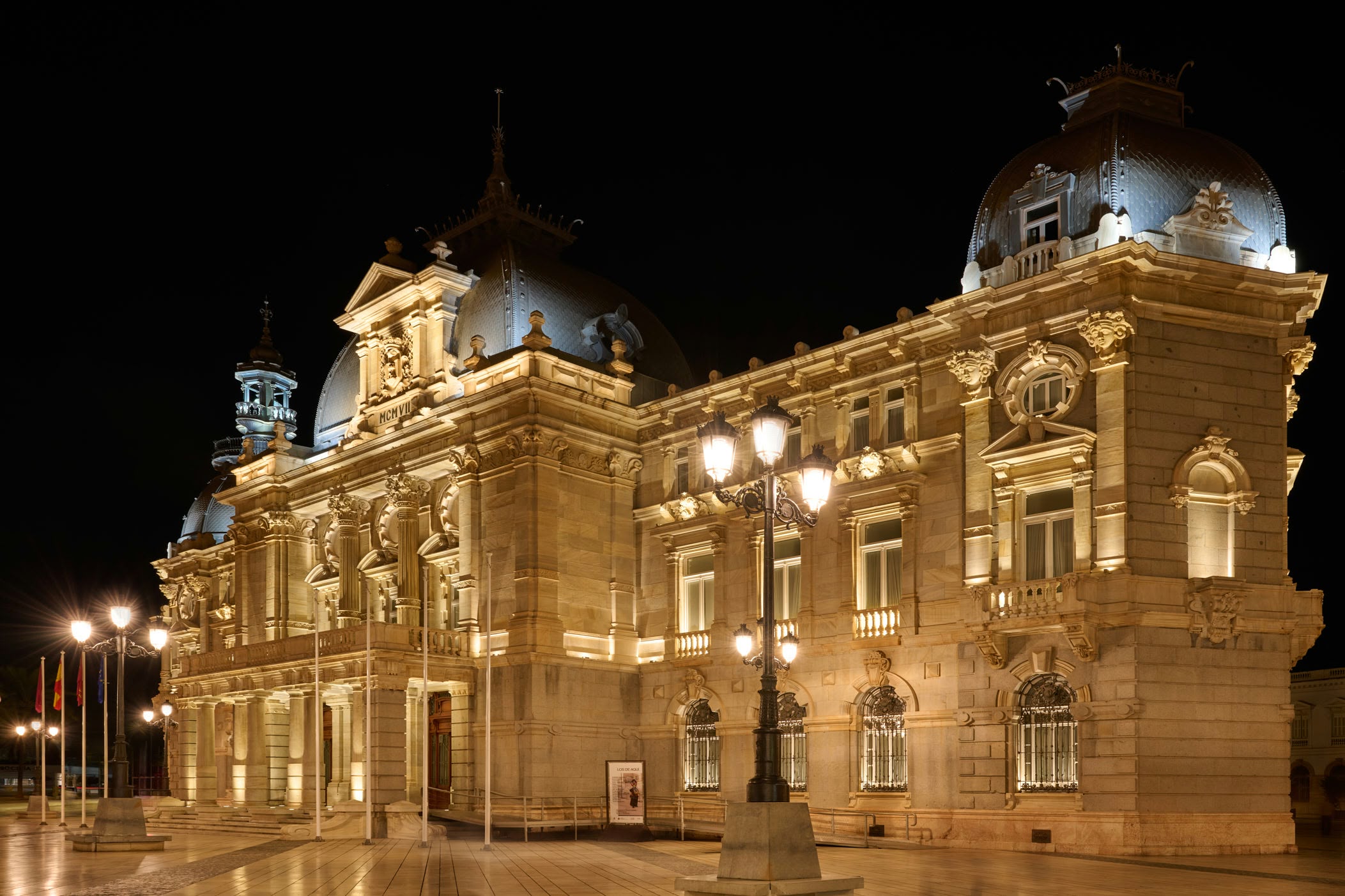
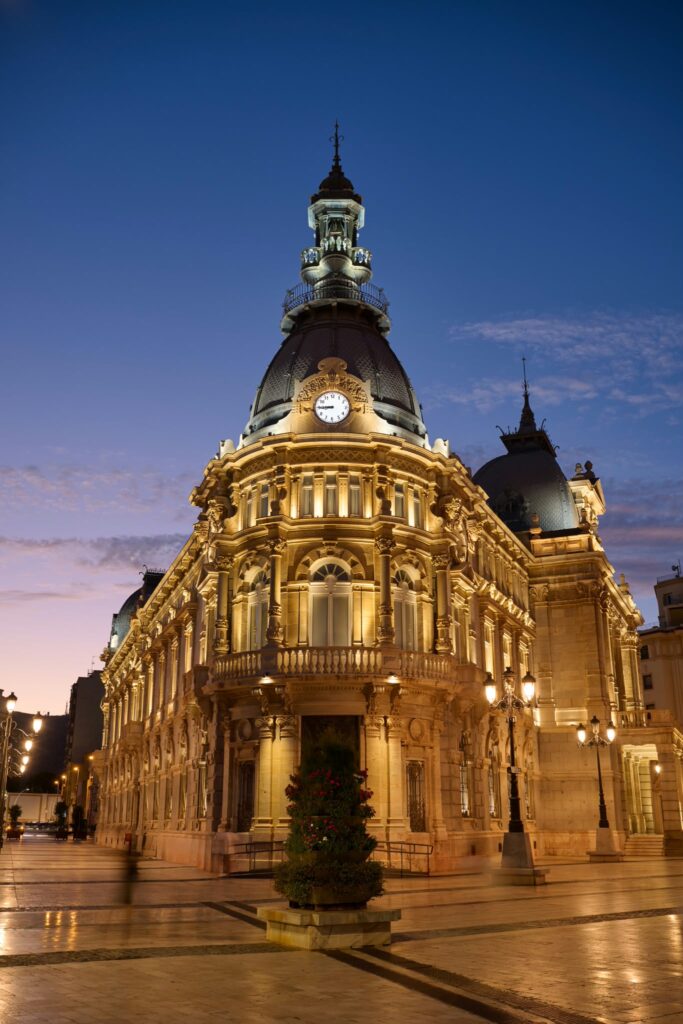
The square in front of Cartagena City Hall hosted the inauguration of the new architectural lighting scheme for the City Hall building, an intervention financed by the Iberdrola Spain Foundation and designed to enhance the architectural, sculptural and ornamental richness of one of the city’s most emblematic landmarks.
Mayor Noelia Arroyo attended the event; Regional Minister for Tourism, Culture, Youth and Sports Carmen Conesa; Iberdrola Spain Foundation Chairman Jaime Alfonsín; Foundation Director Ramón Castresana; and Iberdrola’s Regional Delegate Miguel Ángel Cerdán, among other guests.
The project, in which the Iberdrola Spain Foundation invested €250,000, involved the installation of approximately 2,900 state-of-the-art LED luminaires, arranged according to the building’s specific characteristics and requirements to minimize any impact on the monument. With an installed capacity of 2,904 W, the new system improves energy efficiency by around 60%, thereby strengthening the sustainability of the site.
The new lighting design highlights the City Hall’s eclectic modernist architecture, accentuating its white marble façades, pilasters, balconies, openings, cornices, and decorative reliefs. Attention has also been given to its iconic zinc-clad metal domes, which crown the building and form one of the most recognizable features of Cartagena’s skyline.
The use of assorted color temperatures, ranging from warm tones to bright whites, enhances the proportions and composition of the building, emphasizes the richness of its ornamental details, and strengthens its presence as a civic and institutional landmark after dark. The result is a balanced, sustainable lighting scheme fully aligned with the monument’s character and its historic maritime surroundings.
According to Mayor Noelia Arroyo, “with this new lighting, City Hall once again receives the prominence it deserves at night. It is one of Cartagena’s most recognizable buildings and forms part of the image of the city that we continue to promote.” She also stressed that the project has been delivered more sustainably, using next-generation luminaires that are 60% more efficient and help reduce the carbon footprint.
The mayor noted that this “is not an isolated intervention” and recalled that it complements the lighting of the Castle of La Concepción and the El Molinet Archaeological Park, enabling the city’s heritage to be discovered and enjoyed after sunset.
“I would particularly like to thank the Iberdrola Spain Foundation for its commitment to Cartagena. Through this collaboration, we have shown that innovation and sustainability can go hand in hand in the conservation of our heritage, helping landmark buildings such as City Hall remain at the heart of the city and its surroundings,” the mayor added.
For his part, Jaime Alfonsín, Chairman of the Iberdrola Spain Foundation, highlighted that heritage conservation “requires an approach that combines respect for history with innovation. This intervention enhances the extraordinary architectural richness of Cartagena City Hall, restoring visibility to one of the city’s great landmarks. At the Iberdrola Spain Foundation, we work to make historical and artistic heritage more accessible, sustainable, and closer to society, contributing to its preservation and transmission to future generations.”
Fundación Iberdrola España: Promoting Art, Culture and Social Action
One of the Foundation’s principal areas of activity is the preservation, conservation, and enhancement of historical and artistic heritage. A flagship initiative is its Lighting Programmed, which focuses on interventions in landmark buildings to install or improve interior and exterior lighting systems, helping to safeguard and highlight Spain’s historical and artistic heritage. Since 2011, the programmed has invested more than €3 million in the enhancement of over forty monuments across the country.
In the Region of Murcia, notable projects include the architectural lighting of the Basilica of Vera Cruz and its walled enclosure in Caravaca de la Cruz, inaugurated in November 2025; the travelling exhibition The Prado on the Streets across municipalities throughout the region during 2026; and longstanding collaborations with the Roman Theatre Museum of Cartagena since 2015 and the Salzillo Museum since 2013.
The Foundation also plays a key role in supporting social organizations in the Region of Murcia through its Future with Energy Social Programmed, which awards grants of up to €40,000 to third-sector organizations tackling vulnerability. Beneficiaries incluye Asociación Columbares, Fundación Iniciativa Social en Educación y Familia and Cáritas Cartagena.
Historical Background of Cartagena City Hall
Inaugurated in 1907 and designed by architect Tomás Rico Valarino, Cartagena City Hall is one of the most significant historic and architectural landmarks in the Region of Murcia. It was built during a period of profound urban transformation and economic prosperity driven by mining activity in the Cartagena-La Unión area, the growth of maritime trade and the consolidation of the port as a strategic hub in the Spanish Mediterranean.
Conceived as the seat of municipal government and as a symbol of civic identity and progress, the building has remained at the center of public life in Cartagena for more than a century. Its privileged location overlooking the harbor and connected to the historic center reinforces its status as a major urban landmark.
The building features a distinctive triangular floor plan shaped by its site between the Town Hall Square and the waterfront. Its sculptural decoration, wrought-iron details, stained-glass windows, and façade composition reflect a deliberate fusion of art and architecture in a monument of remarkable grandeur.
Inside, highlights include the main vestibule and the imperial staircase, designed as the building’s representative axis, together with exquisite carpentry, ironwork and stained-glass craftsmanship that reinforce the symbolic and ceremonial character of its spaces. Its historical, artistic, social, and architectural value makes Cartagena City Hall an essential element of the city’s urban landscape and one of the most significant examples of early twentieth-century Spanish public architecture.