Fundación Iberdrola España and the Provincial Council of Valencia visit the rehabilitation works at the Escuela de
- The President of the Provincial Council of Valencia, Vicente Mompó, and the Director of Fundación Iberdrola España, Ramón Castresana, have seen firsthand the progress of the project
- This collaboration agreement, signed in July 2025, forms part of the actions planned by Fundación Iberdrola España to help recover areas affected by the dana storm
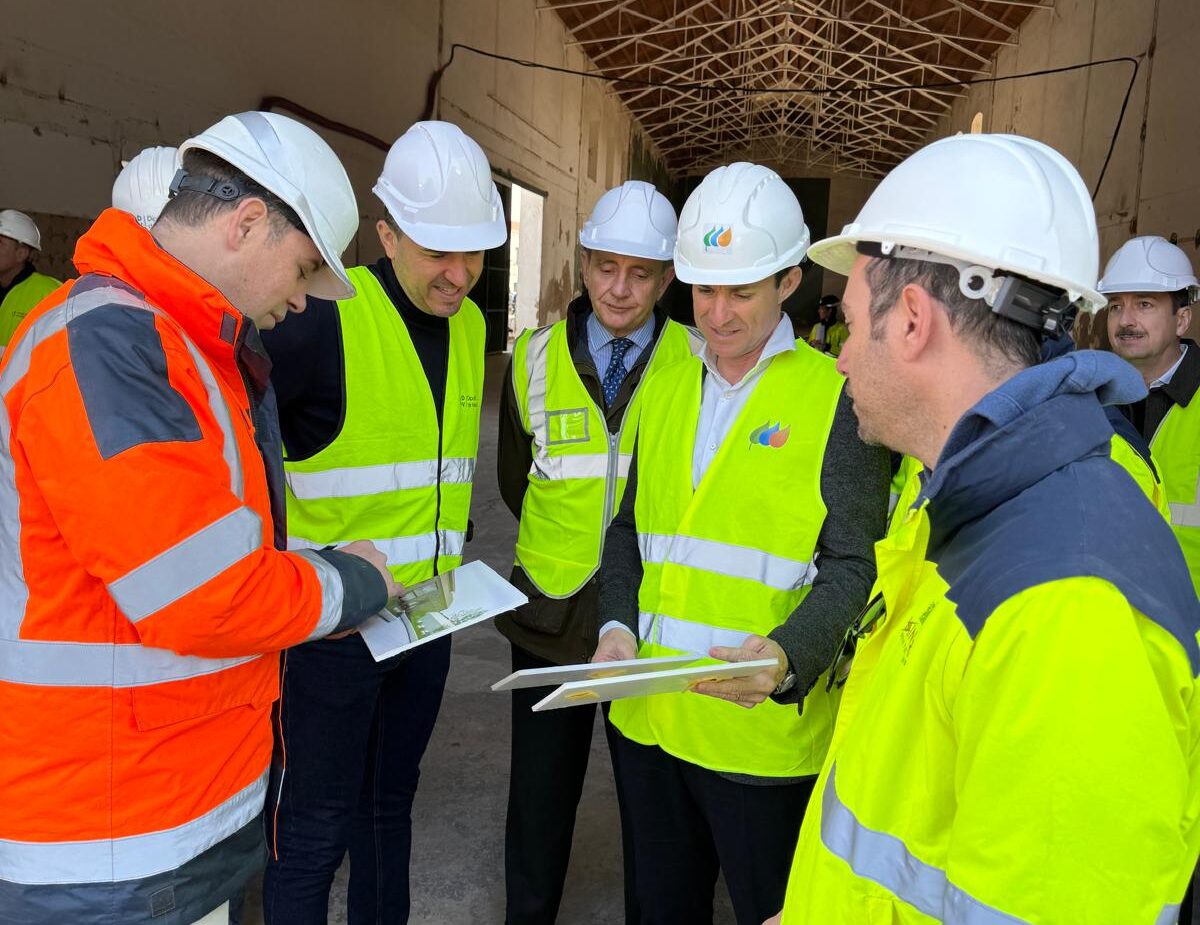
Fundación Iberdrola España and the Provincial Council of Valencia met this morning at the Escuela de Capataces Agrícolas de Catarroja, which was affected by the dana, together with Deka Ingeniería y Arquitectura, the firm responsible for the comprehensive rehabilitation project and expansion of the facilities to modernise, adapt and ensure the operational continuity of a strategic centre for agricultural and environmental training within the Albufera Natural Park.
The President of the Provincial Council of Valencia, Vicente Mompó, and the Director of Fundación Iberdrola España, Ramón Castresana, were able to observe the progress of a project that will require an investment of four million euros, of which three million are being funded by Iberdrola through its Foundation, while the remaining one million is being managed by the provincial authority.
Also present during the visit were the Institutional Delegate of Iberdrola in the Valencian Community, Ibán Molina; the Councillor for Urban Planning of Catarroja, Martí Raga; the Municipal Architect, Ángel Abad; and technicians from the Provincial Council, who reviewed the progress following the demolition of the annex buildings, greenhouses and internal walls of the main warehouse.
Mompó highlighted that “the reconstruction of our land, after having suffered the worst disaster in our history, has become an opportunity to look to the future with determination, hope and the firm intention to improve.”
The provincial president stressed that this intervention will allow the province “to have one of the best agricultural training schools in Spain,” since this is not merely about repairing damage but driving a comprehensive modernisation project. “This project is not limited to restoring damaged facilities; it is, above all, an investment in knowledge, talent and sustainability for our primary sector,” he stated. He also thanked Fundación Iberdrola España for its involvement and praised this model of cooperation: “the rehabilitation of this school, made possible through collaboration with Fundación Iberdrola España, is a clear example of how cooperation between public institutions and private companies can turn adversity into an opportunity to emerge stronger and better prepared.”
For his part, the Director of Fundación Iberdrola España highlighted the institutional alignment that made the project possible and acknowledged “the flexibility of the president and the entire Provincial Council” in launching an initiative of this magnitude in a publicly owned centre. Castresana noted that this public‑private collaboration demonstrates the role the private sector can play in strategic interventions and described the Provincial Council as “the best possible partner” for developing a project that incorporates innovation and will provide students with state‑of‑the‑art facilities.
Conservation and modernisation project
The intervention consists of a set of actions ranging from the architectural restoration of the Escuela de Capataces to the complete modernisation of the facilities, including a new main building that will incorporate two conditioned floors with new classrooms and teaching areas.
Plans include the installation of an auditorium with a capacity for 250 people, the creation of an environmental classroom, a specialised laboratory and an irrigation practice room. A new greenhouse for cultivation and horticultural experimentation will also be built.
In total, more than 4,600 m² of outdoor space will be redeveloped, with new access points to facilitate student entry. To make the site more sustainable, a 30‑kilowatt self‑consumption photovoltaic installation will also be added, significantly reducing electricity use and advancing towards an energy self‑sufficient model.
Over 12 million euros invested in social initiatives
Through its Social Programme, Iberdrola—via Fundación Iberdrola España—has allocated more than 12 million euros to social initiatives in Spain, helping a total of 414,546 people. Since the programme’s launch in 2010, the company has supported more than 500 projects in collaboration with over one hundred social organisations, contributing to the fight against child poverty, academic support, and the social inclusion of children, young people and women in vulnerable situations. The Social Programme has created 1,830 jobs and engaged 8,538 volunteers.
Fundación Iberdrola España also focuses on its scholarship programmes in the fields of energy, biodiversity and the environment, supports research on energy and climate‑change issues, and undertakes cultural initiatives focused on the restoration and preservation of the cultural and artistic heritage of the Iberian Peninsula.